
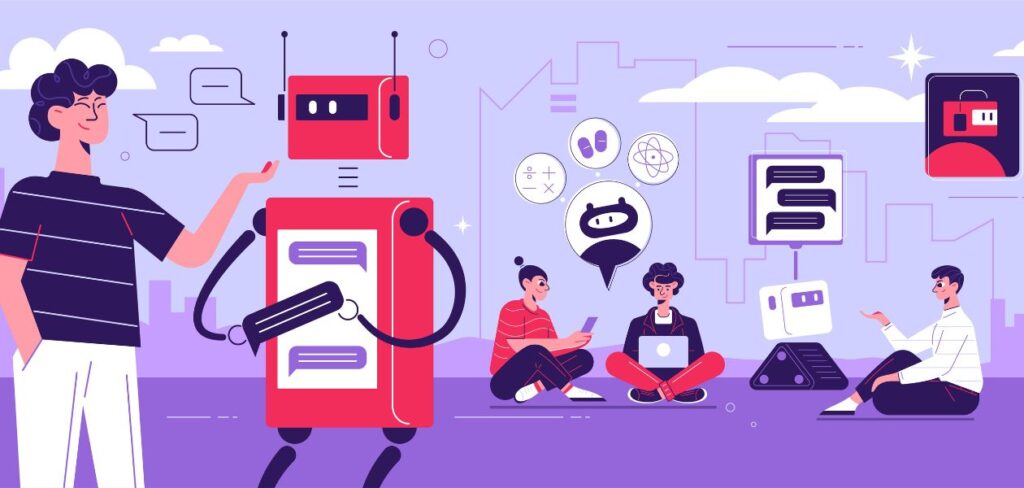
AI Agents Explained: How Intelligent AI Employees Are Transforming Businesses
AI agents are transforming the way businesses operate by acting as intelligent digital assistants capable of performing complex tasks, making decisions, interacting with customers, and collaborating with software systems with minimal human intervention.
Artificial intelligence has evolved far beyond traditional chatbots and content generation. Today’s intelligent AI systems help organizations automate workflows, improve productivity, enhance customer experiences, streamline operations, and accelerate digital transformation.
As businesses continue adopting AI-powered automation, autonomous AI assistants are becoming valuable digital employees that enable teams to work smarter, faster, and more efficiently.
Unlike traditional automation, which follows predefined rules, AI agents can understand context, analyze information, learn from interactions, solve problems, and adapt to changing business requirements.
From managing customer support and qualifying leads to scheduling meetings, analyzing business data, and generating reports, these intelligent systems are changing how organizations operate across different departments.
Whether you are a startup, small business, or large enterprise, understanding AI agent technology can help you improve productivity, reduce operational costs, automate repetitive processes, and deliver better customer experiences.
In this complete guide, you will discover how AI agents are transforming businesses, how intelligent AI employees improve efficiency, and why adopting autonomous AI solutions is becoming a competitive advantage in 2026 and beyond.
What Are AI Agents?
AI agents are intelligent software systems designed to complete tasks autonomously on behalf of users or organizations.
Unlike basic automation tools, these systems can analyze information, make decisions, execute actions, communicate with different software platforms, and improve performance through machine learning.
Think of an AI agent as a digital employee. Instead of only following fixed instructions, it understands goals, gathers relevant information, determines suitable actions, and completes tasks with minimal human supervision.
Examples of AI Agents
- AI customer service assistants
- AI sales assistants
- AI scheduling assistants
- AI research assistants
- AI marketing assistants
- AI data analysts
- AI coding assistants
These intelligent digital workers reduce repetitive workloads while improving speed, accuracy, and business efficiency.
AI Agents Provide 24/7 Customer Support
Customer expectations have changed significantly. People expect immediate assistance regardless of business hours.
AI-powered customer support assistants provide continuous support by answering questions, resolving common issues, processing requests, and transferring complex cases to human representatives when required.
Unlike traditional chatbots, modern AI assistants understand conversation context, remember interactions, and provide personalized responses.
For example, an AI customer service assistant can:
- Track orders
- Recommend products
- Process returns
- Answer billing questions
- Schedule appointments
Benefits
- 24/7 customer support
- Faster response times
- Lower support costs
- Improved customer satisfaction
AI Agents Automate Lead Qualification
Sales teams often spend valuable time reviewing leads that may not be ready to purchase. AI-powered sales assistants solve this challenge by analyzing customer behavior, website activity, engagement patterns, and buying intent.
A sales AI assistant can interact with website visitors, ask qualifying questions, score prospects, and notify sales teams when valuable opportunities appear.
Business Benefits
- Better lead quality
- Higher conversion rates
- Faster sales response
- Improved sales productivity
By automating lead qualification, sales teams can focus more on building relationships and closing deals.
AI Agents Handle Administrative Tasks
Administrative responsibilities consume significant employee time. Intelligent AI assistants automate repetitive activities such as scheduling meetings, organizing calendars, preparing reports, managing documents, and coordinating workflows.
For example, an AI scheduling assistant can review calendars, identify available time slots, send invitations, and manage rescheduling automatically.
Common Administrative Tasks Automated
- Calendar management
- Appointment scheduling
- Email organization
- Meeting summaries
- Task reminders
- Document management
By reducing repetitive administrative work, businesses improve productivity, minimize errors, and increase operational efficiency.
AI Agents Improve Marketing Performance
Marketing teams manage multiple activities across email campaigns, social media, websites, search engines, and advertising platforms.
AI marketing assistants help businesses analyze performance, automate repetitive activities, and optimize campaigns using real-time insights.
An AI marketing assistant can:
- Analyze campaign performance
- Generate content ideas
- Personalize email campaigns
- Schedule social media content
- Recommend audience segments
- Monitor advertising results
Benefits
- Better campaign optimization
- Improved customer targeting
- Increased engagement
- Higher marketing ROI
- Smarter marketing decisions
By integrating intelligent automation into marketing workflows, businesses can improve campaign performance while creating more personalized customer experiences.
AI Agents Enhance Sales Productivity
AI-powered sales assistants support teams throughout the customer journey by identifying buying signals, recommending actions, and automating routine communication.
For example, when a potential customer downloads a product brochure and repeatedly visits a pricing page, an intelligent sales assistant can notify the sales representative and prepare a personalized follow-up message.
AI Sales Capabilities
- Lead scoring
- Follow-up reminders
- Proposal generation
- CRM updates
- Sales forecasting
These capabilities allow sales professionals to spend more time building relationships and converting opportunities.
AI Agents Improve Business Decision-Making
Businesses generate large amounts of data every day, but converting information into useful insights can be challenging.
AI-powered systems analyze data from multiple sources, identify patterns, create reports, and recommend actions based on business performance.
Examples Include:
- Predicting customer demand
- Identifying sales opportunities
- Monitoring financial performance
- Detecting unusual activity
- Forecasting revenue
Business leaders can access faster insights and make more confident decisions using intelligent data analysis.